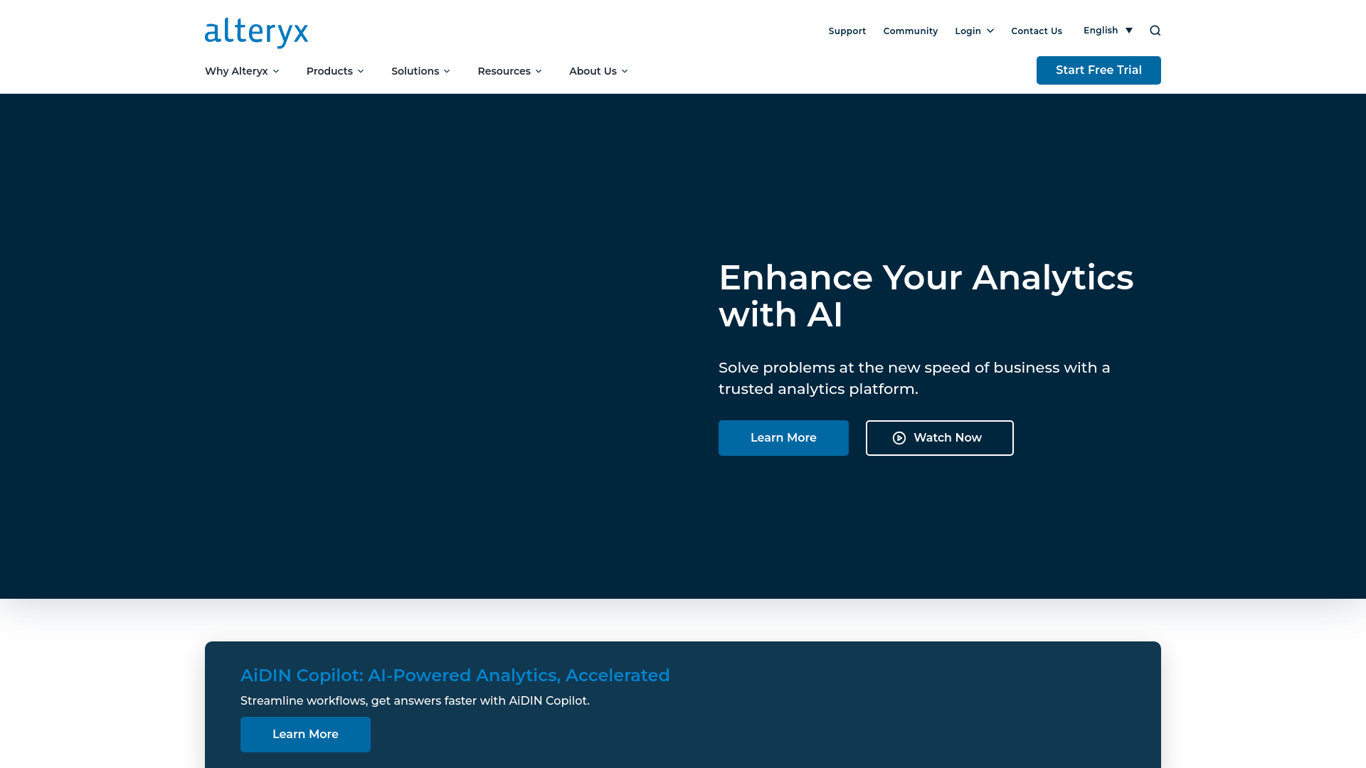
Alteryx Reviews
(Rated by 7 users)
Are you looking for ways to save money when shopping at Alteryx. Our Alteryx coupon codes can help you do just that! Over 7 customers have already used our coupons to save an average of $57 with Alteryx discount codes. There are currently 6 coupons available, so now is the perfect time to join in on the savings.
Are you looking for ways to save money when shopping at Alteryx. Our Alteryx coupon codes can help you do just that! Over 7 customers have already used our coupons to save an average of $57 with Alteryx discount codes. There are currently 6 coupons available, so now is the perfect time to join in on the savings.
Payment Methods
- Verified Store VERIFIED
- Free shipping: Orders $50+
- In-store pickup: Ready in 2 hours
- 30-Day Returns
- Gap Good Rewards (4 brands)
Payment Methods
- Tops: $23 - $70
- Bottoms: $27 - $70
- Outerwear: $34 - $70
- Kids: $29 - $75
Overall Rating
5.0
Base on 7 Reviews
Ratings by Feature
Ratings by Feature
- Good Value4.3
- Price & Quality4.8
- Customer Service4.5
Recent Customer Reviews (7)
Carolos Galarneau
View replies
Quincy LaGrande
View replies
Abigail Peak
View replies
Luca Gallo
View replies
Warrane Fouquet
View replies
Charlotte Boulé
View replies
Anton Simonsen
View replies
Alteryx Pricing
individual licenses
$5,000+
Basic License
$4,950
Common Range
$10,000 - $20,000
High-End Plans
$50,000+
Designer
$5,195
Intelligence Suite
$2,300
Location Intelligence
$11,700
Consumer Intelligence
$33,800
Alteryx Pros & Cons
Pros
1
Comprehensive platform for data preparation, blending, and predictive analytics, enhancing user agility and deployment speed.
2
Automates data manipulation, reducing project time and complexity.
3
Low-code/no-code interface allows users with minimal programming skills to build workflows.
4
Large active community providing extensive examples and support.
5
Swift performance and excellent integration with other platforms like Tableau and PowerBI.
6
Visual workflow design makes it easier to document and maintain complex processes.
7
Built-in connectors and toolkits speed up data processing and ETL tasks.
8
Strong customer support with committed resources for implementation and training.
9
Facilitates handling large volumes of unstructured data quickly and efficiently.
10
Improves accuracy and saves hours of manual work in data analytics.
11
Flexible and versatile for various business functions and analytics needs.
12
Drag-and-Drop Interface: Enables users to build complex workflows without coding, making it accessible for various skill levels.
13
Data Blending: Integrates data from multiple sources (spreadsheets, databases, APIs, cloud services) into unified datasets.
14
Data Preparation & Cleansing: Tools for transforming, enriching, cleaning, deduplicating, and normalizing data ensure high-quality analysis.
15
Advanced Analytics: Supports predictive analytics, spatial analytics (GIS), and integration with Python/R code for custom modeling.
16
Automation & Reusability: Automates repetitive tasks; workflows can be saved and reused to reduce manual effort and errors.
17
AI-Ready Platform: Facilitates AutoML for predictive models and generative AI features; supports AI-generated insights and explanations.
18
Scalability & Orchestration: Allows scheduling and running analytic workflows at scale across the organization.
19
Visualization & Reporting: Builds reports and integrates with BI tools like Tableau; renders visual workflows as analytic apps for self-service insights.
20
Faster Insights: Streamlines operations by making data easy to access, analyze, and act upon quickly.
21
Enhanced Productivity: Reduces time spent on manual data manipulation through automation.
22
Improved Decision-Making: Delivers accurate results by ensuring clean data; enables root cause analysis with AI-driven storytelling.
23
Cross-Functional Use Cases: Widely used in finance, healthcare, retail, manufacturing—empowering analysts to drive business outcomes.
CONS
1
High cost, with individual licenses around $5,000+ per user per year and additional expensive server costs.
2
Steep learning curve for non-technical users despite being low-code.
3
Insufficient training resources and documentation, especially for beginners.
4
Data visualization capabilities are limited, often requiring supplementary tools like Tableau.
5
Some connectors can be unreliable or finicky.
6
Customer support can be slow or difficult to reach, sometimes requiring extra payment for phone support.
7
Interface is somewhat outdated and could benefit from a revamp.
8
Limited AI/ML features compared to competitors.
9
Additional features may require extra payment, which can be inconvenient.
10
Reporting and graphing tools need modernization and improvement.
11
Maintenance of many workflows can become complex without enough developers.
Alteryx Features and Benefits
Features
Comprehensive platform
for data preparation, blending, and predictive analytics, enhancing user agility and deployment speed.
Automates data manipulation
reducing project time and complexity.
Low-code/no-code interface
allows users with minimal programming skills to build workflows.
Large active community
providing extensive examples and support.
Swift performance
and excellent integration with other platforms like Tableau and PowerBI.
Visual workflow design
makes it easier to document and maintain complex processes.
Built-in connectors and toolkits
speed up data processing and ETL tasks.
Strong customer support
with committed resources for implementation and training.
Facilitates handling large volumes of unstructured data
quickly and efficiently.
Improves accuracy and saves hours of manual work
in data analytics.
Flexible and versatile
for various business functions and analytics needs.
Drag-and-Drop Interface
Enables users to build complex workflows without coding, making it accessible for various skill levels.
Data Blending
Integrates data from multiple sources (spreadsheets, databases, APIs, cloud services) into unified datasets.
Data Preparation & Cleansing
Tools for transforming, enriching, cleaning, deduplicating, and normalizing data ensure high-quality analysis.
Advanced Analytics
Supports predictive analytics, spatial analytics (GIS), and integration with Python/R code for custom modeling.
Automation & Reusability
Automates repetitive tasks; workflows can be saved and reused to reduce manual effort and errors.
AI-Ready Platform
Facilitates AutoML for predictive models and generative AI features; supports AI-generated insights and explanations.
Scalability & Orchestration
Allows scheduling and running analytic workflows at scale across the organization.
Visualization & Reporting
Builds reports and integrates with BI tools like Tableau; renders visual workflows as analytic apps for self-service insights.